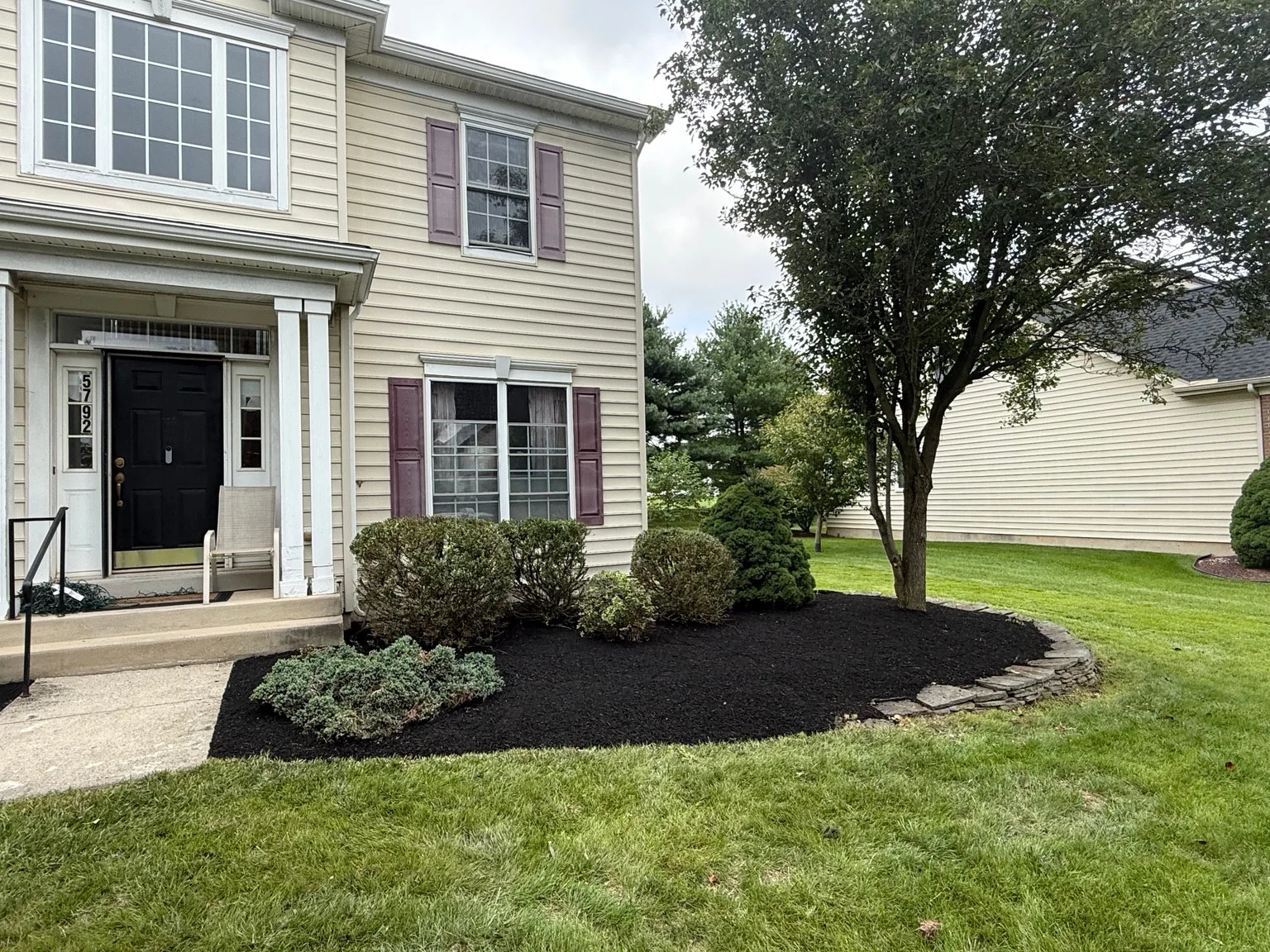
A defined edge can make a yard look tidy. But a widening strip of exposed soil between the grass and sidewalk is a reason to pause before another cut. Are you removing grass growing over the pavement, or cutting farther into the lawn each time?
Start with the existing boundary
Look at the pavement edge and the surviving turf. If the hard-surface boundary is already clear, repeatedly moving the cut inward removes more lawn. A practical response is to stop enlarging the gap and maintain the grass that remains. This is a site-specific judgment, not a rule that edging is always harmful.
What a “flattop” trim means here
If the remaining issue is tall or overhanging leaf growth, a light, level trim may be enough. Here, “flattop” is simply a description: tidy the leaf tips at the surrounding lawn’s height while leaving the soil and established turf boundary alone. It is not a formal horticultural technique.
It does not mean shaving grass down to pavement level. When the soil sits above the sidewalk, those are very different heights. It also does not mean angling the trimmer into healthy grass to carve a wider channel.
University of Missouri Extension warns that string trimmers can scalp turf along sidewalks and driveways, encouraging weeds. Its guidance also recognizes careful vertical edging as a way to avoid that scalping.
Edging still has a purpose
Where grass has spread over a walkway, restoring the boundary can be appropriate. An edger separates lawn from a paved surface; the aim is to maintain that line accurately rather than steadily retreat into healthy turf. Keep the cutting operation at the intended boundary and use equipment according to its instructions.
A bare strip needs its own plan
Stopping an aggressive cut will not instantly refill an existing gap. First establish why it is bare and whether it needs repair. Wear, growing conditions and previous cutting can call for different responses. A clean finish should preserve the lawn you intend to keep.
Have a question about your property? Tell us what you’re seeing.