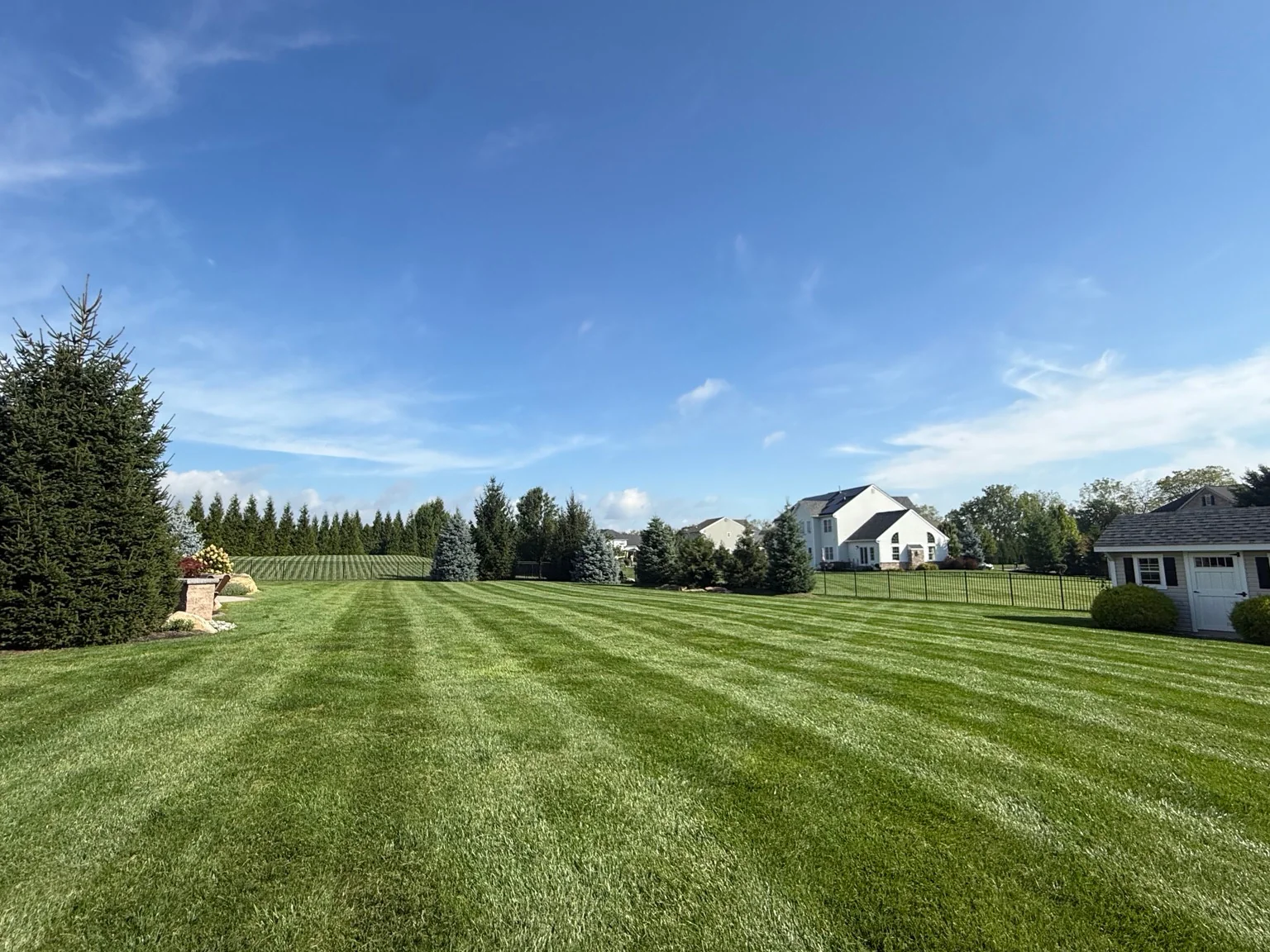
Taking the same route across your lawn every week is easy. The turns are familiar, and you know where to finish. But changing direction is a small adjustment worth making for a Lehigh Valley lawn. A good mowing routine considers the route as well as the height of the cut.
Rotate the route, not just the stripes
University of Minnesota Extension recommends changing mowing direction frequently to encourage upright shoot growth and avoid repeatedly concentrating mowing impacts in the same places. Where the yard allows, mowing at right angles on alternating visits is a straightforward approach.
If you mow parallel to the sidewalk this time, try perpendicular passes next time. A diagonal route can offer another option in an open, level area. The goal is not a complicated stripe pattern; it is to avoid automatically placing every wheel in the same track.
Let the property set the pattern
A rectangular front lawn may allow several routes. A narrow side yard may offer only one safe approach. Trees, beds, slopes and obstacles matter too. Follow your mower’s safety instructions, especially on slopes, and never force a new pattern where it makes mowing unsafe.
Changing direction will not repair established ruts or solve a compacted root zone by itself. Persistent depressions or thin patches deserve a closer look at traffic, soil conditions and drainage.
Keep the cutting height consistent
The pattern can change while the height stays appropriate for your grass and conditions. Follow the one-third rule: remove no more than one-third of the standing grass height in a cut. For example, grass maintained at 3 inches should be mowed before it grows beyond about 4½ inches.
Penn State advises adjusting mowing frequency to growth. If the lawn gets ahead of you, avoid making up for a missed cut by cutting extremely short. Before the next mow, check the height, check the equipment, and choose a safe route that spreads the wear.
Have a question about your property? Tell us what you’re seeing.